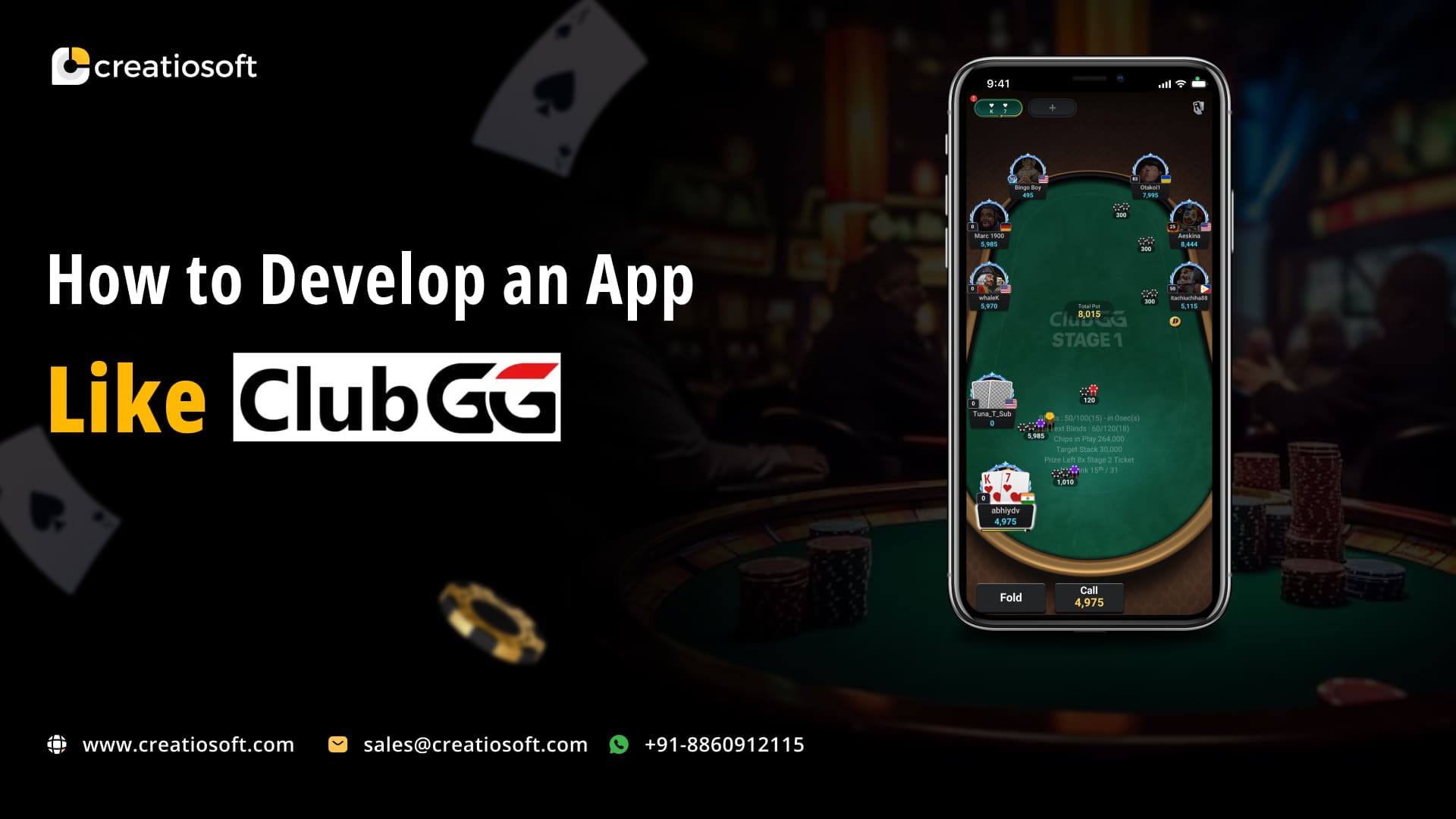
Are you fascinated by ClubGG Poker and dreaming of launching your own poker app? ClubGG has captured players’ attention worldwide with its club-based model, private tables, and trusted gaming communities. You can gauge the popularity of this app from the fact that it has around 1 million downloads. Today, more players prefer platforms that let them control their games, join reliable clubs, and enjoy a secure poker environment. This growing demand has inspired many entrepreneurs and operators to create poker apps like ClubGG and enter the booming online poker industry.
This guide explains everything in a clear and easy way to develop an app like ClubGG Poker. Let’s get into the details.
What is ClubGG Poker?
ClubGG is a club-based online poker app. It allows players to join private clubs instead of playing in open public lobbies. A Club owner or manager manages each club. The club owner controls tables, players, rake, and tournaments. Players feel safer because they usually play with known members. This model builds trust and long-term engagement. That is why many businesses look for a ClubGG poker app clone as a starting point for their own platform.
Why Create a Poker App Like ClubGG?
The demand for private poker games is increasing. Many players dislike crowded public platforms. They want controlled games and familiar faces. When you create a poker app like ClubGG, you give players privacy and flexibility. For operators, this model offers better retention and steady revenue. Club owners bring their own players. This reduces marketing costs. The system is scalable and works well in different regions. This makes it a strong business choice.
Understanding the “Club-Based” Model
The club-based model is simple but powerful. Instead of one global poker room, the app has many private clubs. Each club runs like a small poker room. The club owner decides who can join. They set table rules and rake. Players need a club ID to enter games. This setup builds trust. It also helps operators manage risk and control player behavior more easily.
Also Read: Club Poker Model: What It Is and Why It’s Trending
Key Features of a ClubGG Poker App
a) Private Clubs
Private clubs are the foundation of a club-based poker app. Players cannot join games directly from the lobby. They must first become members of a club. Club admins control who joins and who leaves. This creates trust among players. It also helps reduce the number of fake accounts and unwanted users.
Each club can have multiple tables running at the same time. Admins can decide table limits and game rules. This gives complete control at the club level.
b) Poker Game Modes and Variants
A ClubGG poker app offers multiple poker variants and game modes to suit different player preferences. The app covers Texas hold ’em and Omaha poker variants. They have different game modes such as Rabbit Hunt, Bomb Pot, River Card Squeeze, etc.
Both cash games and tournaments run within clubs. Cash games allow players to join and leave freely. Tournaments provide scheduled competitive play. Different blind levels help clubs manage casual and high-stakes players effectively.
c) Hand History & Statistics
Hand history lets players review completed poker hands in the app. Players can see cards, betting actions, and final outcomes after each game.
Statistics like VPIP and PFR help players understand their own and other players’ playing styles. This feature is essential for regular and professional players. It adds transparency and trust to the platform.
d) Private Tournaments
Private tournaments are hosted exclusively inside clubs. Only club members can participate in these events. Club admins control tournament buy-ins, prize pools, and schedules. Regular tournaments keep players active and engaged. They also create competitive excitement within clubs. This feature plays a key role in building strong poker communities.
e) Multi-Table Play – Play up to 4 Tables at Once
Multi-table play allows players to participate in multiple games simultaneously. In a poker app like ClubGG, players can play up to four tables at once. This feature is popular among experienced players. It helps increase game volume and engagement. The system maintains smooth performance across all active tables. Stable multi-table support improves player satisfaction.
f) Club-Level Customization
Club-level customization gives admins advanced control over gameplay settings. Admins can define table rules and player requirements. Features like VPIP minimum tables help manage playing styles. Double board games add more action to tables. Jackpot settings increase excitement and table activity. These customization options allow each club to create a unique poker experience.
Must Read: 10 Features Every Successful Club Poker App Needs
Process to Develop an Online Poker Game Like ClubGG
Step 1: Market Research and Competitor Analysis
The development process starts with proper market research. This step helps understand what players and club admins expect from a club-based poker platform. Research focuses on player behavior, preferred features, and monetization models. Studying existing poker apps helps identify gaps and opportunities.
Key activities in this step include:
- Analyzing club-based poker platforms and private poker apps.
- Understanding player expectations and playing habits.
- Studying rake models, club structures, and admin controls.
- Identifying strengths and weaknesses of existing platforms.
- Defining a clear target market and business goals.
This step reduces risk and helps build a competitive product.
Step 2: Defining Features and Creating a Roadmap
Once research is complete, features are finalized. This step focuses on deciding what the poker app will offer at launch and what can be added later. A clear roadmap helps manage time and cost. It also keeps development organized.
This phase includes:
- Finalizing core features like clubs, tables, and tournaments.
- Defining admin-level and player-level controls.
- Prioritizing essential and advanced features.
- Creating a development timeline with milestones.
- Planning future updates and scalability.
A clear roadmap ensures smooth development without confusion.
Step 3: UI/UX Design and Frontend Development
UI and UX design focus on how the app looks and feels. Poker apps must be simple to navigate. Players should easily find clubs, tables, and tournaments. Good design improves user retention and engagement.
This stage covers:
- Designing poker tables, lobbies, and club dashboards.
- Creating simple navigation for players and admins.
- Ensuring mobile-friendly layouts and controls.
- Developing frontend screens based on approved designs.
- Optimizing performance for smooth animations and gameplay.
A clean interface improves the overall poker experience.
Step 4: Backend and Game Logic Development
Backend development is the foundation of the poker app. It handles users, clubs, tables, and transactions. Poker game logic is also developed at this stage. Accuracy and stability are critical here.
Key tasks include:
- Developing user and club management systems.
- Building poker game engines and rule logic.
- Implementing fair card dealing and betting flow.
- Managing table states and player actions.
- Ensuring scalability for high traffic.
Must Read: What Tech Stack Should You Use to Build a Poker App?
Step 5: Integrating Payment Gateways and Security Protocols
Payments and security are integrated after core systems are stable. Players need safe and smooth transactions. Security protocols protect user data and funds.
This step includes:
- Integrating deposit and withdrawal systems.
- Supporting multiple payment methods.
- Implementing encryption for sensitive data.
- Securing APIs and server communication.
- Setting up fraud prevention mechanisms.
Secure payments build trust and credibility.
Step 6: Testing (Alpha, Beta, and Final Versions)
Testing ensures the poker app works as expected. Bugs and issues are identified and fixed before launch. Testing is done in multiple stages to reduce risk.
Testing phases include:
- Alpha testing for basic functionality and logic.
- Beta testing with real users for performance feedback.
- Stress testing for high traffic scenarios.
- Security testing to identify vulnerabilities.
- Final testing before public release.
Thorough testing ensures stability and fairness.
Step 7: Launch and Marketing Strategies
After testing, the poker app is ready for launch. Deployment is done on app stores or servers. Marketing focuses on attracting club admins first. Admins bring players into the platform.
Launch activities include:
- App store deployment or server setup.
- Initial club onboarding and admin support.
- Referral and invitation-based growth strategies.
- Promotional offers for early adopters.
- Continuous monitoring and updates post-launch.
Legal Considerations
Legal compliance is a critical part of building an online poker platform. Poker laws vary from country to country and even between states. Some regions allow skill-based poker games. Others restrict real-money gaming completely. Understanding these rules early helps avoid legal trouble after launch. Legal planning also protects the platform owner, club admins, and players. Ignoring legal requirements can result in bans, penalties, or shutdowns.
Important legal areas to focus on include:
- Understanding whether poker is classified as a skill game or gambling in the target market.
- Checking licensing requirements for online poker operations.
- Following local tax and reporting regulations.
- Defining clear terms of service and privacy policies.
- Implementing responsible gaming and age verification measures.
Challenges in Developing a Online Poker App
– Game Fairness and Randomness
Maintaining game fairness is one of the biggest challenges in a club-based poker platform. Players expect every hand to be dealt fairly and without manipulation. Card shuffling and dealing must follow strict randomness rules. Any technical flaw or suspicion can quickly damage player trust. Fairness is even more important in private clubs, where players regularly play with the same group. Strong and tested game logic helps maintain confidence and long-term engagement.
– User Acquisition
Attracting users to a new poker app is not easy. The market already has many established platforms. Players are often hesitant to move to a new app without trust. In a club-based model, growth depends heavily on club admins. If admins do not actively invite players, growth slows down. Building a strong value proposition and a smooth onboarding experience is essential to overcome this challenge.
– Server Stability
Poker apps operate in real time and require high system stability. Even slight delays during gameplay can frustrate players. Server crashes during active games can lead to disputes and player loss. Peak traffic during tournaments puts additional pressure on servers. Maintaining smooth performance under heavy load is technically demanding. Reliable infrastructure is necessary to ensure uninterrupted gameplay.
– Regulatory Compliance
Regulatory compliance is a continuous challenge for poker platforms. Laws related to online poker vary across regions. Some markets treat poker as a skill-based game, while others impose restrictions. Regulations can change over time, requiring platform updates. Failure to comply can result in penalties or shutdowns. Staying aligned with legal requirements is essential for long-term operations.
Partner with Creatiosoft to Build an App Similar to ClubGG Poker
Building a poker app like ClubGG requires technical expertise and a deep understanding of the club-based poker model. Partnering with a reliable poker software development company like Creatiosoft ensures that all aspects of app development are handled professionally. Creatiosoft has been offering end-to-end poker app development services since 2012. Our team is highly experienced in developing ClubGG poker app clones that include all key features.
So far, we have developed 5+ club-based poker apps for our clients. If you want to create the next big club poker app, get in touch with us today.